Notification Centre
Banners, alerts and a panel that slid the whole desktop aside to show what you had missed. It replaced Growl, which had been doing the job unofficially for years.
At launch

Everything, on every device.
Overview
iCloud stopped being a service you configured and became the thing documents lived in. Messages replaced iChat and picked up iMessage threads mid-conversation from a phone. Notes, Reminders and Game Center arrived from iOS wholesale.
It also dropped a word: "Mac OS X" became simply "OS X", eleven years after the X arrived and one year before Apple stopped using cats. Gatekeeper appeared too — the first time the Mac took a view on which applications it would open by default.
Notification Centre
Banners that slid in and got out of the way, alerts that waited, and a panel behind the desktop holding everything you had missed — the iOS model, adapted for a machine with a larger screen and more patience.
Notifications arriving at the corner
Features
Two hundred changes, most of them things an iPhone owner already recognised.
Banners, alerts and a panel that slid the whole desktop aside to show what you had missed. It replaced Growl, which had been doing the job unofficially for years.
At launch
iChat became Messages and joined iMessage, so a conversation started on a phone continued on the Mac in the same thread.
At launch
Documents in the cloud as a first-class idea, with an open and save panel that showed iCloud alongside the disk.
At launch
Both split out of Mail and iCal into apps of their own, matching iOS and syncing with it.
At launch
Only opening apps from the App Store or identified developers by default. The beginning of code signing as a fact of life on the Mac.
At launch
The whole desktop thrown to an Apple TV wirelessly — nine years before AirPlay learned to work in the other direction.
At launch
Checking mail, backing up and installing updates while the lid was shut, on machines with flash storage.
At launch
System-wide speech to text in any text field, a year before Siri would arrive on the Mac proper.
At launch
Leaderboards, achievements and cross-platform multiplayer with iOS, in an app Apple would eventually quietly retire.
At launch
The name
The word "Mac" was dropped from the operating system's name with this release, leaving OS X to sit alongside iOS in a family where no platform was named after its hardware.
It lasted four years. In 2016 Sierra restored the connection with a lower-case macOS, matching watchOS and tvOS, and the naming has been stable ever since.
Desktop
Another galaxy, this one edge-on and cooler in tone — the last of the four space desktops before Mavericks brought the Mac back to Earth.
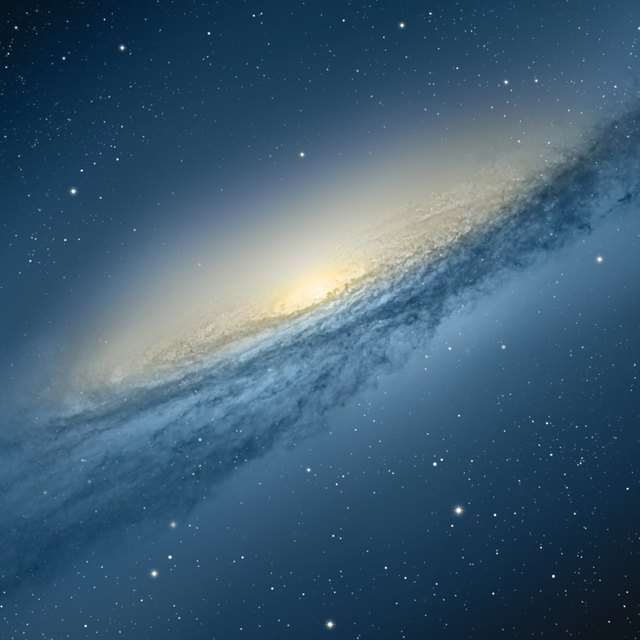 GalaxyEdge on, against the dark
There was only ever one. A system-wide Dark Mode did not arrive until Mojave in 2018, so this page's light and dark appearances are ours, not Apple's — the switch in the corner still works, but the desktop of the day looked like this and only this.
Lineage
Apple named ten releases after big cats before moving to California in 2013.
macOS 10.8 · 2012
iCloud everywhere, Notification Centre, Messages — and the year "Mac" left the name.
macOS 10.9 · 2013
Free, for the first time — and the first named after a place rather than a cat.
Compatibility
Mountain Lion cut deeper than Lion had, requiring hardware capable of the 64-bit kernel and dropping a swathe of 2006 and 2007 machines.